




Most of us spend the workday in small, constant motion to manage stress and keep our attention from drifting.
Bouncing a leg under the desk, tapping fingers on the keyboard tray, spinning a pen through your knuckles: these aren't just nervous habits. They're self-regulation. They are a way for your nervous system to manage stress, release built-up tension, and keep you alert through long hours at work.
Adult fidget tools exist to satisfy that need for movement without distracting the people around you. Whether you want to keep your fingers occupied through video calls or keep your body moving while you type, here's how to choose the right one.
What Is an Adult Fidget?

The word fidget comes from the Old Norse-derived term meaning "to move restlessly." Fidgets are sensory tools that are designed to stimulate the proprioceptive and tactile systems through repetitive movements that take almost no thought.
Children's fidgets tend toward bright plastic and clicky buttons. Adult fidgets are built for professional settings instead: low-profile, quiet, and usable in a cubicle, an open-plan office, or a conference room without drawing attention or breaking your concentration.
They're commonly associated with autism spectrum disorder (ASD) and neurodivergence, but they help anyone dealing with high stress, sensory needs, or attention fatigue at work.
What Does a Fidget Actually Do?
A fidget provides secondary sensory input, both tactile and proprioceptive, that absorbs excess nervous energy and satisfies the body's need to move.
At work, people use them to:
- release micro-anxiety and nervous tension
- stay alert through repetitive tasks
- give physical energy an outlet so the mind stops wandering
Note: fidget tools are useful day-to-day coping aids for workplace anxiety, but they're wellness tools, not a substitute for diagnosis, psychiatric care, or therapy.
Fidgeting vs. Stimming vs. Needing to Move: What's the Difference?
The three overlap, but they do different things.
- Fidgeting is subtle, often unconscious micro-movement that sustains focus or drains off mild nervous energy.
- Stimming, or self-stimulatory behavior, is repetitive movement or sound that neurodivergent people use to self-regulate during sensory overload or emotional intensity, such as hand-flapping or rocking.
- A physical need to move involves large muscle groups burning off physical energy, which is what makes sitting still for long stretches uncomfortable or tiring.
Why Use a Fidget at Work?
Adding a fidget or an active sitting tool to your setup helps with focus, cognitive performance, and physical comfort.
1. Staying Focused on Repetitive Tasks

Attention drops during low-stimulation work: clearing an inbox, checking spreadsheets, data entry. Moving your hands or feet in a gentle, repetitive way stimulates the prefrontal cortex and prompts the release of dopamine and norepinephrine. That sensory input keeps the brain alert and cuts down on careless errors.
2. Building a Focus Bubble in a Noisy Office

Whether it's household noise at home or ambient chatter in an open office, filtering out distractions uses up attention you need elsewhere. A tactile fidget acts as an anchor, giving your attention something predictable to hold while you tune out the environment.
3. Supporting Working Memory and Mental Alertness
Repetitive tactile or postural micro-movements supply low-level sensorimotor feedback. Research suggests this can support working memory, executive function, and alertness without competing for the attention the task itself needs.
4. Fighting Sitting Fatigue
Bodies aren't built to hold still in a task chair for eight hours. Static posture brings physical lethargy, flagging motivation, and stiffness. Body-based fidgeting, such as active sitting or foot rocking, keeps blood circulating and takes the edge off that sedentary fog.
5. Releasing Deadline Stress and Nervous Energy

Deadlines, tense negotiations, and back-to-back meetings raise cortisol. Staying completely still keeps that stress response trapped in the body, which shows up as tight shoulders, a clenched jaw, and habits like nail-biting or pen-clicking. A quiet fidget gives the nervous system somewhere to put it.
Adult Fidgets and ADHD in the Workplace

In adults with Attention-Deficit/Hyperactivity Disorder (ADHD), physical restlessness often manifests as subtle micro-movements such as restless legs, foot tapping, or constant finger manipulation. For them, moving while working is a neurological need and a compensatory strategy for sustaining focus and executive function. Clinical research indicates that forcing an adult with ADHD to sit rigidly still compromises working memory and processing speed, and that allowing subtle movement improves cognitive performance.
A well-designed workplace fidget redirects this physical drive into silent movement, keeping the brain locked in without disturbing colleagues.
How to Choose the Right Fidget for Your Desk

Look past novelty items and judge the tool against how you actually work.
|
Selection Criterion |
What to Look For |
|
Noise Level |
Must be completely silent for open offices, phone calls, and Zoom meetings. |
|
Cognitive Load |
It must be 100% intuitive to use, so you don't have to look at it or think about it. |
|
Hand Availability |
Determine if it works while typing/using a mouse, or requires a free hand. |
|
Movement Type |
Identify where your restlessness is the strongest: fingers, hands, legs, or full posture. |
|
Professional Aesthetics |
Choose matte metals, natural wood, leather, or refined textiles over cheap plastics. |
|
Desk Footprint |
Ensure it fits discreetly in a pocket, palm, or under your desk setup. |
|
Sensory Function |
Matches your need: squeezing for pressure, spinning for fluidity, rubbing for texture |
Fine-Motor Fidgets: Keeping Your Hands Busy

Fine-motor fidgets are small hand-held items for quick manipulation. Because they occupy one or both hands, they suit the passive parts of the day: webinars, team meetings, reading reports, or making phone calls.
Spinner Rings and Fidget Jewelry

Wearable and discreet, fidget rings have a rotating outer band or spinning beads, giving you sensory input nobody can see during a meeting or a presentation.
- Best for: Seamless, invisible fidgeting during face-to-face interactions.
- Drawback: Simple single-motion mechanics can become repetitive over time.
Premium Fidget Pens
These are working pens with textured grips, silent sliders, or smooth magnetic elements built into a functional writing instrument.
- Best for: Taking notes during long meetings.
- Drawback: Avoid spring-loaded clicky pens in open workspaces because the clicking sound quickly becomes a distraction to team members.
Stress Balls, Squishies, and Therapy Putty

Flexible silicone putties (like Theraputty), dense foam stress balls, and gel-filled tools provide firm resistance.
- Best for: Releasing acute frustration, muscle tension, or stress through deep pressure input.
- Drawback: Occupies at least one hand entirely, so you can't type at the same time.
Magnetic Sliders, Flip Chains, and Infinity Cubes

Magnetic sliders in matte aluminum or brass, and articulated infinity cubes, allow fluid, rhythmic thumb movement.
- Best for: Brainstorming sessions, strategic planning, or deep-thinking breaks.
- Drawback: Can be visually distracting to others if used on video calls within camera range.
Worry Stones and Acupressure Rings
Acupressure finger rings give a sharp, bright sensation that clears brain fog. Worry stones in polished stone or wood offer something smoother and more grounding.
- Best for: Grounding anxiety during high-pressure moments or resetting focus.
Quick Comparison: Fine-Motor Hand Fidgets
|
Fidget Tool |
Primary Action |
Best Workplace Scenario |
Noise & Discretion |
Key Limitation |
|
Spinner Ring |
Thumb spinning |
Meetings, interviews, sales calls |
Excellent / Silent |
Single movement option |
|
Magnetic Slider |
Thumb sliding |
Individual desk work, brainstorming |
Good / Low click |
Can be visually noticeable |
|
Worry Stone |
Thumb rubbing |
High-stress presentations, calls |
Excellent / Silent |
Single sensory texture |
|
Infinity Cube |
Folding / unfolding |
Long video meetings, reading |
Moderate / Silent if aluminum |
Requires practice to use blindly |
|
Acupressure Ring |
Rolling up/down finger |
Combating mid-afternoon brain fog |
Excellent / Silent |
Intense sensation; temporary use |
|
Therapy Putty / Stress Ball |
Squeezing / kneading |
High-stress deadlines |
Good / Silent |
Keeps hands off keyboard |
Postural Fidgeting: Moving Your Body While Keeping Your Hands Free
If your work requires continuous two-handed typing, mouse navigation, or dual-monitor multitasking, hand fidgets aren't practical. Postural fidgeting uses active seating and under-desk equipment to keep your body moving while leaving your hands completely free to work.
The Bloon Ergonomic Active Sitting Ball Chair

The Bloon office ergonomic seat works as a whole-body version of a fidget. It is a full-body outlet for restlessness rather than a hand-sized one.
Move Continuously While Keeping Your Hands Free
The main advantage of the Bloon active seat is that it breaks up physical immobility without pulling you away from the work, whether that work needs non-stop typing, mouse navigation, or two monitors at once.
How Dynamic Sitting Works
Bloon's spherical shape creates a slight instability that keeps your core stabilizer muscles and your vestibular system continuously engaged.
Those ongoing, silent micro-adjustments absorb nervous energy and physical tics: leg shaking, foot bouncing, squirming in a rigid chair. By keeping circulation and oxygen delivery going, dynamic sitting also helps you stay sharp.
How Bloon Outperforms a Standard Gym Ball
Unlike generic fitness or yoga balls, Bloon was co-designed with an osteopath specifically for long-term daily sitting. Three things set it apart at a desk:
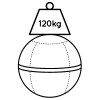
- Weighted Anti-Roll Base: The weighted bottom keeps it anchored when you stand up, so it doesn't roll off across the floor.
- Upholstery rather than vinyl: Woven mesh, corduroy, and natural linen, which makes it read as furniture instead of gym equipment.
- A look that works in an office: It fits an executive suite, an open-plan floor, a conference room, or a home setup.
Under-Desk Rocking Footrests and Wobble Boards

An oscillating under-desk footrest allows your feet and ankles to rock back and forth quietly under your workstation.
- Best for: Releasing leg restlessness and tapping energy when using a standard ergonomic office chair.
Active Balance Cushions
Air-filled discs sit on top of the chair you already have. They are a portable, inexpensive way to add core movement and postural change.
- Best for: Hybrid workers who split time between a home office and hot-desking at a corporate HQ.
Under-Desk Resistance Bands
Heavy-duty elastic bands stretch around the front legs of a standard office chair so you can bounce your ankles against the resistance.
- Best for: Restless legs and foot-bouncers who need physical resistance to burn off excess motor energy.
Quick Comparison: Postural Fidget Tools
|
Tool |
Action Type |
Ideal Use Case |
Discretion Level |
Main Consideration |
|
Active Sitting Ball Chair |
Micro-oscillations & bouncing |
Full-time desk work, WFH setups |
High (Sleek upholstered designs) |
Requires a short adjustment period |
|
Rocking Footrest |
Foot/ankle rocking |
Under standard desk setups |
Excellent (Hidden under desk) |
Lower body engagement only |
|
Balance Disc Cushion |
Controlled posture wobble |
Hot-desking, traveling, hybrid work |
Good |
Less dynamic than full ball chairs |
|
Chair Resistance Band |
Ankle pushing/bouncing |
Restless legs, foot tapping |
Excellent / Silent |
Does not improve upper-back posture |
The Verdict: Building Your Personal Focus Setup
Managing stress and holding your focus at work isn't about sitting perfectly still. It's about giving your nervous system the right outlets.
- For passive phases (meetings, calls, listening, reading): Use a quiet fine-motor fidget like a spinner ring, magnetic slider, or tactile worry stone to anchor your attention.
- For active execution (typing, coding, writing, email management): Switch to postural fidgeting. An active ball chair or under-desk foot rocker satisfies your body's need for movement while keeping both hands completely free for productive work.
Pair a discreet hand tool with active sitting, and you have a complete setup: alert, comfortable, and composed through even the most de