




Do you feel a heavy, dragging sensation low in your abdomen after a long day at your desk?
You can do your core work and your Kegels religiously at home and still feel it. Hours locked in one position undo a lot of that effort. While pelvic floor weakness is usually discussed as a women's issue, men are affected, too.
The cause is mechanical. Prolonged sitting on a standard office chair raises the pressure inside your abdomen, and your pelvic floor absorbs that pressure for hours at a time.
Here is how to set up the way you sit so it doesn't have to.
End-of-Day Pelvic Heaviness: What Your Pelvis Is Dealing With at Work
The Piston Effect: How Sitting Raises Intra-Abdominal Pressure

That dull ache or sense of heaviness after eight hours at a desk is a sign of raised pressure inside the abdomen.
Sitting at a rigid 90-degree angle or slumping forward over your keyboard compresses the abdominal cavity. The pressure works like a piston, pushing your organs downward onto the pelvic floor and keeping those muscles under load all day. By five o'clock, you feel it.
Why a Rigid Chair Switches Off Your Transverse Abdominis

Your transverse abdominis is the deepest layer of abdominal muscle. It wraps around your torso like a belt, supporting your spine and holding your organs in place.
When you sink back into a standard, rigid office chair, that muscle stops working. And when it does, your pelvic floor is left to carry the weight of your organs on its own.
Day after day, the sling of muscle that makes up the pelvic floor gradually gives way under pressure that it was never meant to take alone.
Why Floor Exercises Can't Undo a 40-Hour Sitting Week

The heaviness you feel at the end of a shift is the result of eight hours of steady mechanical pressure on the pelvic floor.
Fifteen minutes of Kegels at home, or a weekly session of pelvic floor physical therapy, can't fully offset that. The pressure is constant; the exercises are not.
So how do you reduce the pressure itself?
How to Take Pressure Off Your Pelvis at Your Desk
The answer is in how you set yourself up. Here are the postural adjustments that relieve the pelvic floor during the workday.
Keep Your Pelvis Neutral

Failing to stabilize the pelvis is the most common posture mistake office workers make. Rolling the pelvis backward so you sit on your tailbone, crossing your legs, rounding your back, and pushing your head forward all work against you.
Aim for a neutral pelvis: back straight, neither arched nor tucked under. In that position, the deep muscles of your abdominal wall can do their job and hold the pelvis steady.
Adjust Your Seat Height to Open the Hip Angle
An ergonomic setup starts with seat height.
Set your chair so your knees sit slightly lower than your hips. Opening the angle between your thighs and your torso beyond 90 degrees immediately reduces the downward pressure on your lower abdomen.
Keep Your Feet Flat on the Floor

Feet flat on the floor, spread your weight evenly, and keep the pelvis stable.
Cross your legs or let your feet dangle, and the pelvis tilts out of balance, leaving the pelvic floor to compensate just to hold your torso upright.
Sit Tall to Wake Up the Deep Muscles

How you sit determines how much weight presses down on the pelvic floor. Clinical biomechanics research shows the pattern clearly: the taller you sit, the lighter the load.
To find the position, imagine a string attached to the crown of your head, drawing you gently toward the ceiling. Lengthening through the spine re-engages the transverse abdominis and takes weight off the pelvic organs.
Breathe to Free Your Diaphragm
Sitting tall and breathing well go together.
Opening the rib cage gives the diaphragm, the abdominal muscles, and the pelvic floor room to move, which spreads pressure through the abdomen more evenly.
One thing to avoid: holding your stomach in. It compresses the abdomen further and restricts your breathing.
How to Strengthen Your Pelvic Floor While Seated
A few targeted exercises will strengthen the pelvic floor while you sit. No one will notice you doing them, whether you're at your desk, in the car, or at home.
Seated Kegels
Once it becomes a habit, strengthening your pelvic floor at work takes no thought at all.
Sit up straight with your feet flat on the floor. Imagine you are stopping the flow of urine or holding in gas. Squeeze those internal muscles for five to ten seconds, then release fully. Repeat ten times.
Squeeze internally, without holding your breath or clenching your glutes. Three rounds a day will keep the pelvic floor strong.
Seated Diaphragmatic Breathing

Coordinating your breath with your pelvic floor matters. Poor mechanics, such as pushing your stomach out and bearing down as you exhale, drive pressure straight onto the pelvic floor.
The diaphragm and the pelvic floor move together with each breath:
- On the inhale, the diaphragm moves down, and the pelvic floor relaxes and lowers.
- On the exhale, as you draw your navel in toward your ribs, the diaphragm rises, and the pelvic floor lifts with it.
Building It Into Your Day
Someone who has recently given birth, or who is dealing with incontinence, needs more than a desk routine, and pelvic floor physical therapy with a licensed specialist is the right starting point.
Otherwise, regular daily practice is usually enough to keep the pelvic floor strong and your organs well supported. Three sets of ten contractions a day is a reasonable target.
The Bloon Active Seat: Tone and Protect Your Pelvic Floor Without Thinking About It
Rather than sitting rigidly for hours, try active seating with an ergonomic ball chair. Sitting on a ball chair keeps your deep stabilizers, the pelvic floor among them, working continuously, without you having to think about it.
Micro-Movements That Keep the Pelvic Floor Active

The Bloon ergonomic ball chair was designed by an osteopath to counter the effects of sedentary work. Where a standard office chair invites you to slump, dynamic sitting keeps the muscles that stabilize the pelvis involved.
Because the base is slightly unstable, your body makes constant small adjustments to stay balanced. That recruits the abdominal wall, the transverse abdominis, and the pelvic floor, reflexively and without conscious effort.
Pelvic Mobility and Better Circulation

The benefits of a ball chair go beyond core engagement. The freedom to move means your pelvis isn't fixed in one position all day.
Those small movements help keep blood circulating and reduce pelvic congestion, which means less heaviness in your legs, less tingling, and less of that dragging sensation after hours at a desk.
Discreet Enough for the Office
A ball chair doesn't have to look like something borrowed from the gym.
The Bloon ball chair is wrapped in premium fabric and comes in a range of colors, so it reads as furniture rather than gym equipment.
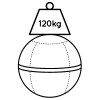
The Bloon Active Seat is built on a weighted anti-roll base. It's more stable to sit on, and it won't roll away across the office when you stand up.
Conclusion
Pelvic floor physical therapy and Kegel exercises build real strength.
But sitting still for eight hours a day works against them. The pressure your pelvic floor absorbs while you sit undoes much of what those exercises achieve.
An active ball chair fills the gap. Its unstable base builds small, constant movement into your workday, so your deep core stays engaged and your pelvic floor stays supported, without you having to think about it.